
How to Win Friends & Influence People
The original playbook for human relationships, and still the best one written. Carnegie's core insight is simple and devastating: people are moved by how you make them feel, not by logic or credentials. This book rewired the way I approach every negotiation, client relationship, and conversation. I've re-read chapters of it more times than I can count, and something new lands each time. If you only read one book on this list, make it this one.
View on Amazon
Meditations
Written in private and never intended for publication, Meditations is a Roman emperor's journal of self-correction and philosophical practice. What's remarkable is that the most powerful man in the world was writing notes reminding himself to be humble, patient, and focused on what he could control. The Stoic framework: separate what is within your power from what is not, and act accordingly. It is as practical today as it was in 180 AD. I return to it whenever I need grounding.
View on Amazon
Shoe Dog
Probably the best memoir I've ever read. The story of Nike is not a story about a great business idea. It's a story about obsession, near-death financial crises, and what happens when a person refuses to quit on something they believe in with no rational justification. Knight writes with an honesty and vulnerability that most CEOs never allow themselves. You finish this book genuinely moved, and immediately more willing to take risk on things you believe in.
View on Amazon
Animal Farm
A fable that takes less than two hours to read and stays with you for decades. Orwell's account of how a revolution becomes the very thing it overthrew is one of the most efficient pieces of political writing ever produced. The horror of it is how gradual and logical each step feels. Every generation needs to read this book, because every generation produces people who believe the rules don't apply to them once they're in power.
View on Amazon
1984
The definitive warning about totalitarianism, and one that gets more unsettling the older you get. Orwell's invention of concepts like doublethink, newspeak, and the memory hole weren't just literary devices; they were accurate predictions of how power corrupts language and perception. Reading this alongside the news cycle is an exercise in uncomfortable recognition. It's not a comfortable book, but it's a necessary one.
View on Amazon
Can't Hurt Me
One of the most raw, honest accounts of what the human mind is capable of when it stops lying to itself. Goggins grew up in an abusive household, overcame severe learning disabilities and obesity, failed Navy SEAL training twice, and became one of the most elite endurance athletes in the world. His concept of the "40% rule," the idea that when you think you're done, you're only 40% of the way to your actual limit, is something I think about on hard days. This book doesn't inspire, it challenges.
View on Amazon
Never Finished
The follow-up to Can't Hurt Me goes even deeper. Where the first book is about discovering how much you're capable of, this one is about what happens after you've proven yourself, and why the work never stops. Goggins argues that the greatest danger isn't failure, it's complacency after success. The idea that you've "arrived" is a trap. This book is a harder read in some ways because it removes the excuse of not yet having started.
View on Amazon
Rich Dad Poor Dad
The book that shifts the way you think about money, shifting from earning it to making it work for you. Kiyosaki's contrast between his highly educated but financially struggling father and his less formally educated but wealthy mentor cuts to the core of why financial literacy isn't taught in schools. The concept of assets vs. liabilities, and the idea of buying assets that generate income rather than working for a paycheck, was formative for me. Essential reading before any serious investment conversation.
View on Amazon
The Psychology of Money
Housel's central argument is that wealth is less about what you know and more about how you behave, and that behavior is shaped by your personal history with money in ways most people never examine. Each chapter is short, densely packed, and immediately re-readable. The chapter on "room for error" alone changed how I think about risk in real estate deals. This is one of the most practically useful books about money ever written, and it reads like a conversation, not a textbook.
View on Amazon
12 Rules for Life
Dense, challenging, and worth every page. Peterson draws from evolutionary biology, Jungian psychology, mythology, and the Bible to build a case for why individuals need to take responsibility for their own lives before trying to fix the world. The rules themselves are almost secondary to the reasoning behind them. Peterson makes you earn the conclusion. I found myself dog-earing chapters and coming back to passages weeks later. It's a serious book that demands serious engagement.
View on Amazon
The 7 Habits of Highly Effective People
The operating system for a disciplined and principled life. Covey's framework moves from private victory (discipline, integrity, clarity) to public victory, built on understanding others before expecting to be understood. What separates this book from generic productivity advice is Covey's insistence that effectiveness has to be built on character, not technique. The habits are timeless because they're grounded in universal principles rather than trends. I've recommended this more than any other book in the business category.
View on Amazon
Greenlights
Part memoir, part philosophy, entirely original. McConaughey's organizing idea is that every red light and yellow light in life eventually becomes a green light if you navigate it correctly. It's simple but surprisingly profound. The book is drawn from journals he's kept since he was 15, which gives it an intimacy and honesty that most celebrity memoirs completely lack. I wasn't expecting to get as much from this as I did, and that element of surprise made it hit harder.
View on Amazon
When Breath Becomes Air
A neurosurgeon in his mid-thirties, at the peak of his training, is diagnosed with terminal lung cancer. Instead of writing a book about dying, he writes a book about what makes a life worth living, and he does it with the precision of a scientist and the soul of a poet. I've never read anything that cuts through distraction and triviality as quickly as this does. It's a short book. Read it in one sitting if you can.
View on Amazon
Mere Christianity
Lewis argues for the existence of God and the truth of Christianity with the rigor of a logician and the warmth of a poet. What makes this different from most religious apologetics is Lewis's insistence on meeting skeptics exactly where they are; he was one himself for years. Whether or not you share his faith, the quality of his reasoning is remarkable. I found myself unable to dismiss arguments I expected to easily reject. That kind of intellectual honesty earns serious respect.
View on Amazon
The Four Agreements
Short, sweet, and an important reminder of what life can be. Ruiz distills ancient Toltec wisdom into four simple principles: be impeccable with your word, don't take anything personally, don't make assumptions, and always do your best. The simplicity is deceptive; these are genuinely hard to practice. The second agreement alone (don't take anything personally) could restructure how most people move through the world if they actually internalized it. This is a book you read in an afternoon and think about for years.
View on Amazon
The Diary of a Young Girl
One of the most important documents in human history, and one of the most quietly extraordinary pieces of writing ever produced. Anne Frank was thirteen when she began this diary and fifteen when it was cut short. What she produced in those two years is not just a record of terror and confinement, but a portrait of a fully alive human being: curious, funny, romantic, ambitious, and utterly unbroken in spirit. No summary does it justice. It has to be read.
View on Amazon
What Would the Rockefellers Do?
A practical guide to the financial strategies that old money actually uses to build generational wealth, specifically through the Infinite Banking Concept, which uses whole life insurance policies as a personal banking system. The Rockefellers, Walt Disney, and other wealthy families used this strategy for decades. Most people have never heard of it because banks and Wall Street don't profit from it. This is a short book with a big idea that changes how you think about where to park capital.
View on Amazon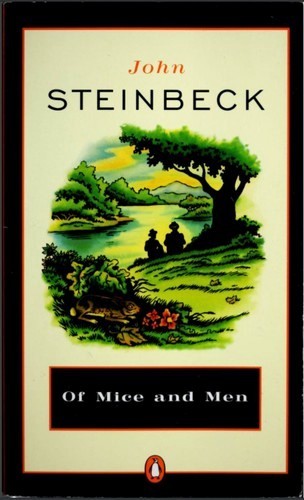
Tortilla Flat
Steinbeck at his most playful and his most human. Set in Monterey, California after World War I, the novel follows a loose band of friends, paisanos, who live entirely outside the logic of ambition, money, and respectability. The book is funny and warm, but underneath is something genuinely moving: a portrait of loyalty and friendship as the highest form of wealth. Steinbeck based it loosely on the legends of King Arthur's Knights of the Round Table, which gives it an unexpected mythic quality.
View on Amazon
The Hobbit
The adventure that launched a world. There is something in The Hobbit that captures the experience of being called into a life bigger than the one you planned. Bilbo didn't ask for any of this, and that's exactly the point. Tolkien's ability to make you feel the weight of a long journey, the texture of a strange landscape, and the courage it takes to keep going is unmatched in literature. I first read it young and it holds up completely on re-reading as an adult.
View on Amazon
Harry Potter and the Sorcerer's Stone
The book that made a generation fall in love with reading, and holds up completely on re-reading as an adult. What strikes you the second time is how carefully Rowling constructed an entire world before a single word was published, and how naturally the themes of loyalty, courage, and belonging emerge from the story rather than being imposed on it. There's also something worth noting about a story where the most powerful character is defined not by ability, but by love. That's not an accident.
View on Amazon
The Holy Bible
The foundation. No other text has shaped Western civilization, including its law, literature, ethics, art, and language, more profoundly than this one. Reading the Bible seriously, rather than selectively, is a different experience than most people expect. The wisdom literature alone (Proverbs, Ecclesiastes, the Psalms) contains some of the most penetrating writing about the human condition ever produced. I return to it regularly, and it consistently reveals something I wasn't ready to see the last time.
View on Amazon